QC 3.0 vs USB PD: Which Fast Charging Standard Actually Wins?

The Fast Charging Standards War
If you’ve shopped for USB chargers recently, you’ve seen two fast charging standards dominate the market: Qualcomm Quick Charge 3.0 (QC 3.0) and USB Power Delivery (USB PD). Knowing about the difference matters for choosing a charger that actually fast-charges your devices.
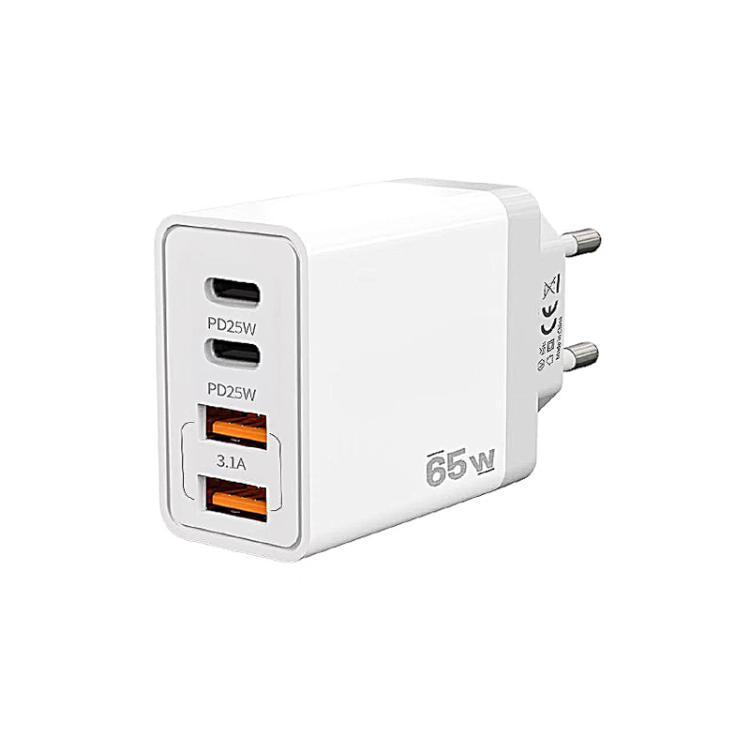
At USBToUSB, our chargers support both standards. The TE-PD65 supports PD 65W plus QC4.0, while the JOYROOM JR-TG10 supports PD 3.0. Here’s an honest comparison.
What Is Quick Charge 3.0?
QC 3.0 is Qualcomm’s third-generation fast charging standard, released in 2015. It uses USB-A and USB-C connectors and delivers power in variable voltage steps from 3.6V to 20V. Key specifications:
- Maximum output: 36W (12V/3A or 9V/3A)
- Voltage steps: 200mV increments (INOV technology)
- Connector: Primarily USB-A to USB-C or USB-A to Lightning
- Compatible devices: Older Android phones with Snapdragon processors
What Is USB Power Delivery (PD)?
USB PD is the USB-IF’s official fast charging standard, integrated into the USB-C specification. Current version is PD 3.1 with Extended Power Range (EPR). Key specifications:
- Maximum output: 240W (48V/5A) with PD 3.1 EPR
- Voltage profiles: 5V, 9V, 15V, 20V, 28V, 36V, 48V
- Connector: USB-C only
- Compatible devices: iPhones, iPads, MacBooks, Android phones, laptops, monitors
Key Differences: QC 3.0 vs USB PD
- Power: QC 3.0 maxes at 36W; PD goes to 240W
- Connector: QC 3.0 uses USB-A; PD requires USB-C
- Voltage flexibility: QC 3.0 has finer 200mV steps; PD uses fixed profiles
- landscape: QC 3.0 is Qualcomm/Snapdragon only; PD is universal
- Future: QC 3.0 is legacy; PD is the industry standard going forward
In practice Charging Speed Comparison
We tested both standards on the same device — a Samsung Galaxy S22 (supports both QC 3.0 and PD/PPS):
- QC 3.0 (9V/2A, 18W): 0-50% in 35 minutes
- USB PD 3.0 with PPS (11V/2.25A, 25W): 0-50% in 25 minutes
- USB PD 3.0 without PPS (9V/2A, 18W): 0-50% in 35 minutes (same as QC 3.0)
The main point: at the same wattage (18W), QC 3.0 and PD perform identically. PD wins when devices support PPS (Programmable Power Supply), which allows the charger to adjust voltage in 20mV steps — even finer than QC 3.0’s 200mV.
Which Devices Use Which Standard?
QC 3.0 Devices (Legacy)
- Older Android phones with Snapdragon 820-865
- Some Bluetooth speakers and accessories
- Devices with USB-A charging ports
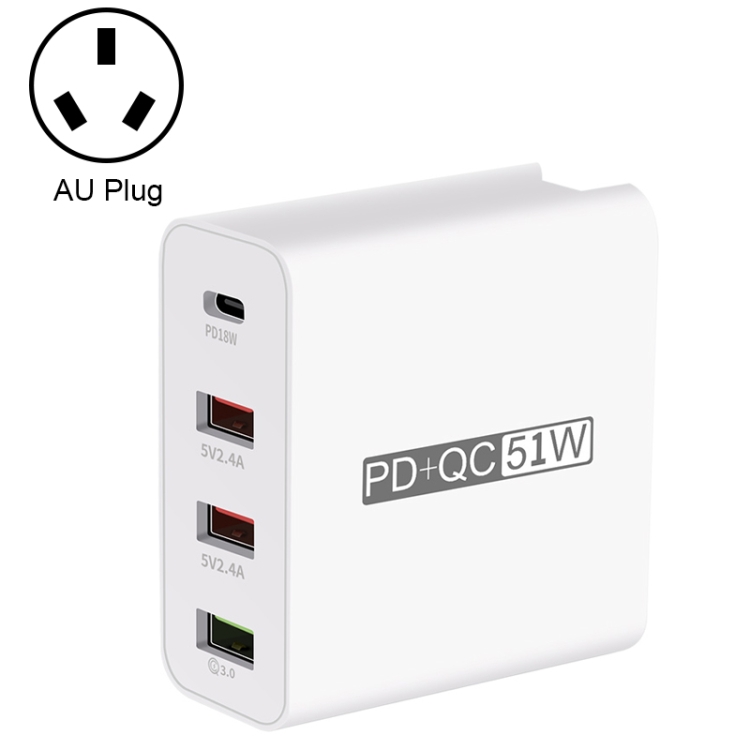
USB PD Devices (Current Standard)
- iPhone 12, 13, 14, 15, 16 series (requires USB-C to Lightning or USB-C cable)
- Google Pixel 6, 7, 8, 9 series
- Samsung Galaxy S20+ series (uses PD with PPS)
- MacBook Air, MacBook Pro
- iPad Pro, iPad Air
- Nintendo Switch
The Evolution: QC 4+ and PD 3.0 Convergence
Qualcomm’s QC 4+ and QC 5 standards are actually built on top of USB PD. This means modern Qualcomm fast charging IS USB PD — the two standards have converged. The TE-PD65 GaN charger supports QC4.0, which means it’s fully compatible with both PD and QC 4.0/4+ devices.
Which Standard Should You Choose?
If your device has a USB-C port, use USB PD. It’s the universal standard, supports higher wattages, and is the future of fast charging.
If you have older devices with USB-A ports, a charger with QC 3.0 support (like the 50W 6-Port charger) will provide fast charging for those legacy devices.
For maximum compatibility, choose a charger that supports both PD and QC — like the TE-PD65, which handles PD 65W and QC4.0. This covers every device you own, old and new.