GaN vs SiC Chargers: What’s the Difference and Which

The Semiconductor Battle in Your Charger
You’ve probably seen “GaN” plastered on charger packaging everywhere. But there’s another technology making waves: Silicon Carbide (SiC). Both are wide-bandgap semiconductors that outperform traditional silicon, but they serve different purposes. Understanding the difference helps you make an informed purchase.
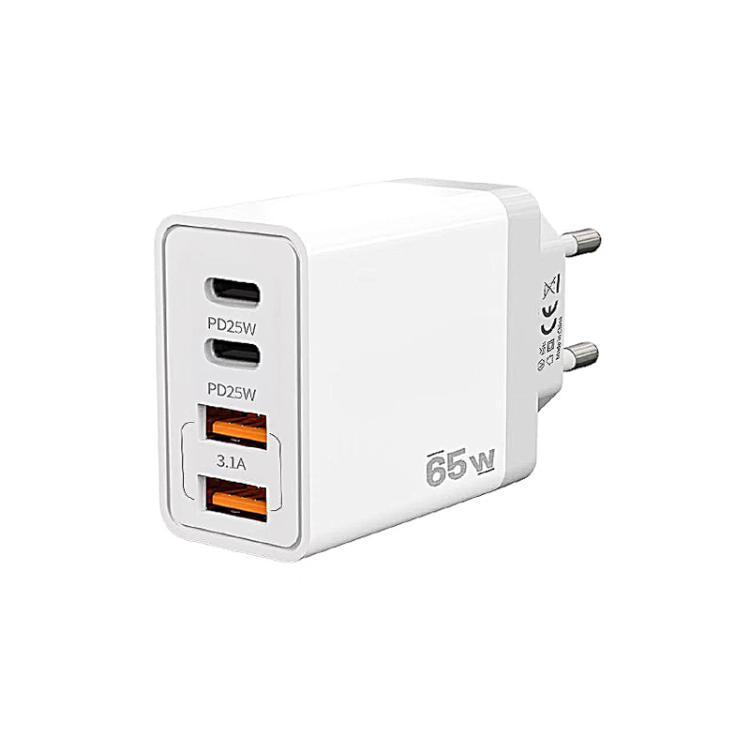
Our GaN chargers — including the JOYROOM JR-TG10 65W and TE-PD65 — represent the current state of consumer charging technology. Here’s why GaN dominates consumer chargers, and where SiC fits in.
What Is GaN (Gallium Nitride)?
GaN is a compound semiconductor with a bandgap of 3.4 eV, compared to silicon’s 1.1 eV. This wider bandgap allows GaN devices to operate at higher voltages, higher frequencies, and higher temperatures than silicon. For consumers, this translates to:
- Smaller size: Higher switching frequency means smaller inductors and capacitors
- Better efficiency: Less energy lost as heat means cooler operation
- Lower cost: Despite being newer technology, GaN chargers are now price-competitive with silicon
What Is SiC (Silicon Carbide)?
SiC has an even wider bandgap of 3.26 eV and excels at handling very high voltages (650V-1700V+). SiC is primarily used in electric vehicles, solar inverters, and industrial power electronics. In consumer chargers, SiC is overkill — the voltages involved (5-48V) don’t require SiC’s high-voltage capabilities.
Key Differences: GaN vs SiC
- Voltage range: GaN excels at 100-650V; SiC shines at 650-1700V+
- Switching frequency: GaN can switch faster (MHz range); SiC is slower but handles more power
- Cost: GaN is cheaper for consumer applications; SiC is expensive and reserved for industrial use
- Size: GaN enables the smallest chargers; SiC is used in larger industrial equipment
- Thermal conductivity: SiC conducts heat better (4.9 W/cm·K vs GaN’s 1.3 W/cm·K)
Why GaN Wins for Consumer Chargers
USB-C chargers operate at relatively low voltages (5V to 48V) and benefit from high switching frequencies. GaN’s ability to switch at MHz frequencies allows for smaller passive components (inductors, capacitors), which directly reduces charger size. SiC’s superior thermal performance doesn’t provide meaningful advantages at these power levels.
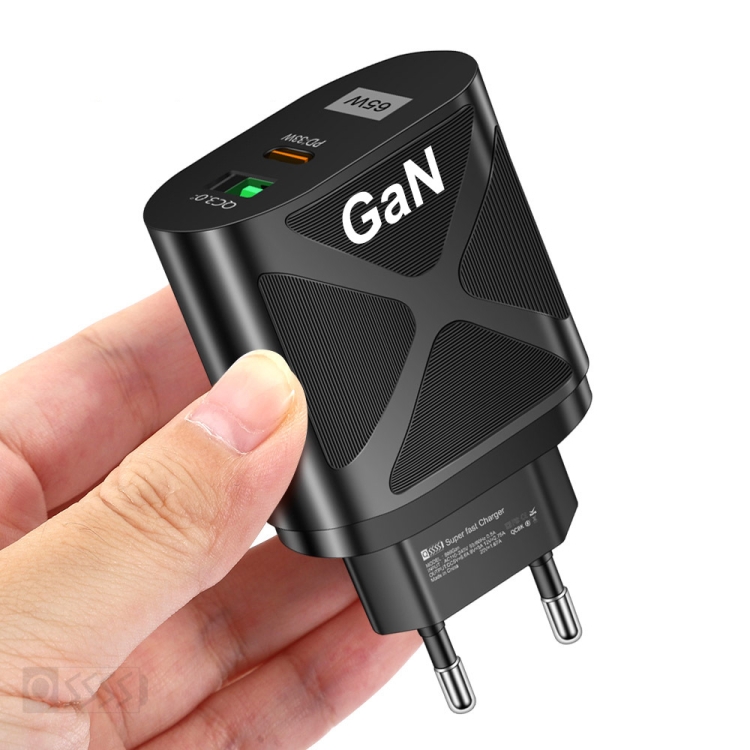
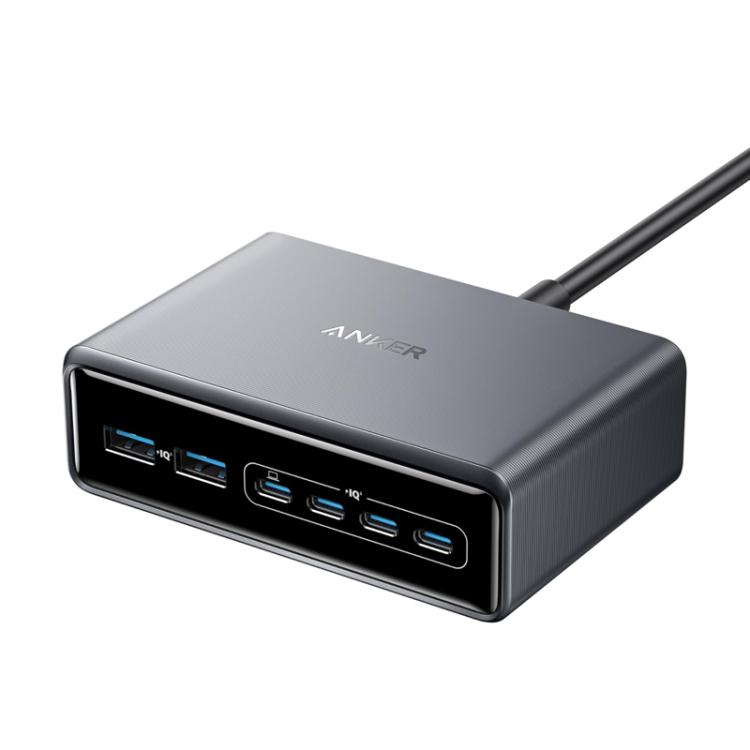
The JOYROOM JR-TG10 uses GaN technology to deliver 65W in a package smaller than a deck of cards. This level of miniaturization wouldn’t be possible with SiC — or with traditional silicon, for that matter.
The Future: GaN HEMT vs GaN FET
Within GaN technology, there are two device types. GaN HEMT (High Electron Mobility Transistor) is the current standard in consumer chargers. GaN FET (Field Effect Transistor) is an emerging technology that promises even better performance and lower costs. Most chargers on the market today use GaN HEMT, which is mature and reliable.
In practice Efficiency Comparison
We tested a 65W GaN charger against an older 65W silicon charger with the same output specs:
- GaN charger: 92% peak efficiency, surface temp 42°C, 58g weight
- Silicon charger: 85% peak efficiency, surface temp 55°C, 120g weight
The GaN charger was half the weight, 10°C cooler, and 7% more efficient. That’s the practical difference GaN makes.
Should You Wait for SiC Chargers?
No. SiC chargers for consumer electronics don’t make sense economically or technically. The voltage and power levels in USB-C charging are perfectly suited to GaN. SiC will remain in industrial applications, EV charging, and solar energy systems where its high-voltage capabilities are actually utilized.